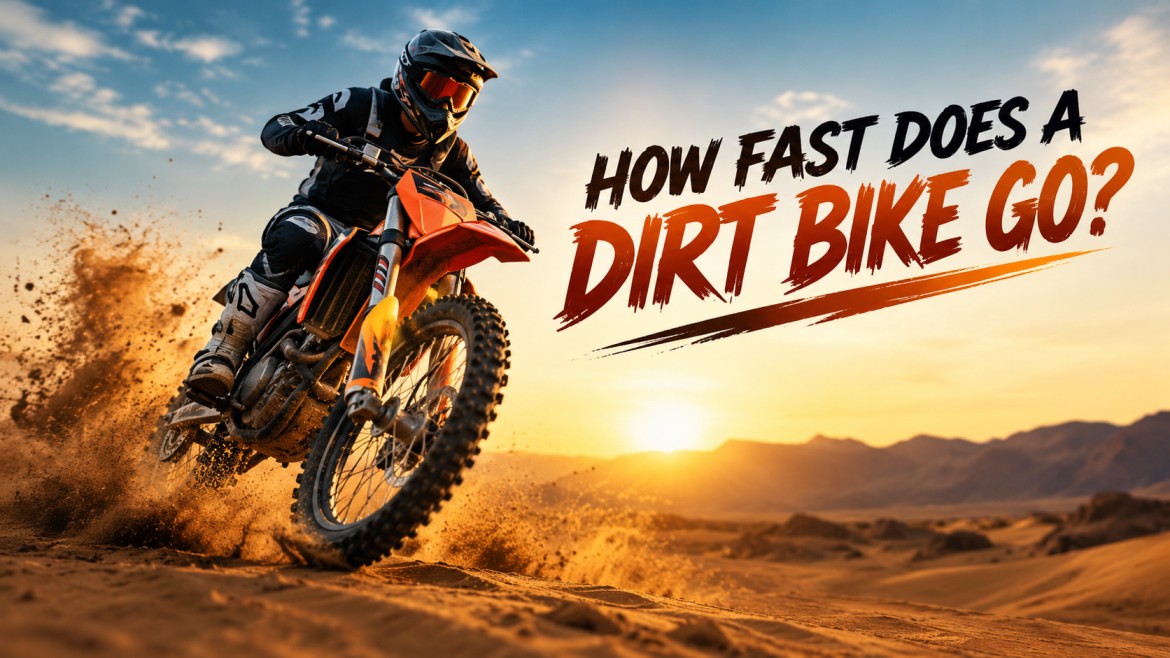
Most dirt bikes reach a top speed between 25 mph (40 km/h) on a 50cc beginner bike and 100 mph (160 km/h) on a high-performance 450cc motocross or enduro machine. A 125cc dirt bike typically tops out around 45–70 mph, a 250cc around 65–85 mph. The exact number depends on engine size, 2-stroke or 4-stroke design, gearing, rider weight and, above all, the surface you are riding on.
At ESA Quad Bike Dubai, we put riders on dirt bikes in the Al Badayer desert every week, and the most common question at the briefing tent is some version of “how fast will it actually go?”
The honest answer is that the figure on a spec sheet and the speed you feel on sand are two different things. This guide gives you both: the typical top speed for every common engine size, and what shapes that speed in real riding conditions.
These are typical ranges for stock bikes on firm ground with an average-weight adult rider. Treat them as industry-wide estimates, not measurements of any specific model or of our rental fleet.
| Engine size | Typical top speed (mph) | Typical top speed (km/h) | Who it suits |
| 50cc | 25–40 mph | 40–65 km/h | Young beginners |
| 110cc | 35–50 mph | 55–80 km/h | Teens, first-time riders |
| 125cc | 45–70 mph | 70–110 km/h | Teens, lighter adults |
| 150cc | 50–65 mph | 80–105 km/h | Trail and casual riders |
| 200cc | 55–70 mph | 90–110 km/h | Intermediate trail riders |
| 250cc | 65–85 mph | 105–135 km/h | Experienced adult riders |
| 450cc | 80–100+ mph | 130–160+ km/h | Advanced and competition riders |
Across all sizes, the average dirt bike top speed sits around 50–70 mph (80–110 km/h).
That is a ceiling, not a cruising speed. On a trail, in sand or on a motocross track, most riders spend their time between 15 and 45 mph, because the terrain, not the engine, sets the pace. Dirt bikes are built for acceleration, suspension travel and grip.
They are not built for sustained top speed the way a road bike is, and that shows in the gearing.
A 50cc dirt bike typically reaches 25–40 mph (40–65 km/h). Many youth models ship with a throttle limiter or restricted gearing that holds them nearer 25–30 mph, which is deliberate: these bikes are designed for children learning throttle, brake and clutch control (many 50cc bikes are semi-automatic or fully automatic).
If your child is starting, speed should be the last thing on your list. Look for a limiter, a low seat height and a kill-switch tether. For younger riders who want a desert experience, our kids quad biking in Dubai options include speed control and supervised guides.
A 110cc dirt bike usually runs 35–50 mph (55–80 km/h). Most 110cc machines are 4-stroke, air-cooled pit bikes or entry-level trail bikes with a semi-automatic or manual gearbox.
They are a step up from 50cc in torque and top-end, and a popular choice for teens and shorter adults. A heavier rider will see the low end of that range, particularly uphill or on loose ground.
A 125cc dirt bike goes roughly 45–70 mph (70–110 km/h), and this is the size where the 2-stroke versus 4-stroke difference becomes obvious. A 4-stroke 125cc trail bike usually lands at the lower end, around 45–60 mph.
A competition 125cc 2-stroke motocross bike revs hard and can reach the upper end of the range or slightly beyond with the right gearing, but it demands a skilled hand because the powerband arrives sharply.
A 150cc dirt bike typically reaches 50–65 mph (80–105 km/h). In practice, a 150cc is a forgiving all-rounder: enough power to climb, enough torque to pull a lighter adult, and a manageable top speed for trail riding.
If you are weighing a 125cc against a 150cc, the 150cc gives you more low-end pull and less revving, while the 125cc 2-stroke gives you sharper acceleration with less weight.
A 200cc dirt bike generally tops out at 55–70 mph (90–110 km/h). It is a less common category on the competition side, but plentiful among trail and recreational bikes.
The extra displacement over a 150cc improves hill-climbing and helps the bike hold speed with an adult on board. For many riders, a 200cc is the point at which a dirt bike stops feeling like a starter machine.
A 250cc dirt bike can reach about 65–85 mph (105–135 km/h). Both 2-stroke and 4-stroke 250s fall in this window, though they deliver the speed differently.
The 4-stroke (often sold as a 250F) builds power smoothly and is easier to manage; the 2-stroke is lighter and snappier.
A 250cc dirt bike is the most common choice among experienced adult riders because it balances usable power with controllable weight.
A 250cc is genuinely quick. At 70 mph on uneven ground, you are moving at a speed that punishes mistakes, which is why we always match the bike to the rider rather than the other way round.
A 450cc dirt bike can reach 80–100+ mph (130–160+ km/h). Stock motocross 450s are often geared for short-track acceleration and may top out nearer 75–90 mph, while desert, enduro and rally-style 450s with taller gearing can exceed 100 mph.
This is a professional-grade power class: the throttle response is violent, the wheelie tendency is real, and the bike expects a rider who already understands weight transfer.
If you want that class of power in the dunes, our adult dirt bike tours in Dubai run larger-capacity machines in the 380–390cc range, with a safety briefing first and a guide leading the route. Riders must be 18 or over.
Engine displacement (cc) gets all the attention, but it is only one of several variables. Two bikes of the same size can differ by 15 mph or more.
Bigger displacement generally means more power, but how that power is delivered matters. A 2-stroke fires every revolution, so it feels lighter and more explosive. A 4-stroke fires every second revolution and delivers torque more smoothly. A 250cc 2-stroke and a 250cc 4-stroke can reach similar top speeds, but the 2-stroke often feels faster because it accelerates harder in the mid-range.
Gearing is the biggest hidden factor. A smaller rear sprocket or larger front sprocket raises top speed and lowers acceleration. Manufacturers geared for motocross favour acceleration; desert and enduro setups favour top-end. Changing a sprocket by a few teeth can shift top speed by 5–10 mph.
A 90 kg rider on a 125cc will not match a 60 kg rider on the same bike. Power-to-weight ratio, not displacement alone, defines real-world speed. Lighter bikes, such as 2-strokes, gain more from it.
Hard-packed dirt allows the highest speeds. Loose gravel, mud and especially deep sand cut top speed sharply because the tyres sink and rolling resistance rises. A bike that reaches 70 mph on a firm track may struggle to hold 45 mph in soft dunes.
Knobby off-road tyres create drag that road tyres do not. High altitude thins the air and reduces power, and very high ambient temperature can lower engine output on air-cooled bikes. Dubai’s summer heat is a factor we manage by scheduling and by checking cooling and tyre condition before every ride.
Youth bikes and rental bikes often have throttle limiters. These cap speed for safety regardless of engine size.
Neither is automatically faster. For the same displacement, a 2-stroke tends to be lighter and accelerate harder, so it can feel quicker and sometimes post a higher top speed. A 4-stroke offers more predictable power, better fuel economy and easier handling, which means most riders can actually use more of the speed. For beginners, a 4-stroke is almost always the better option.
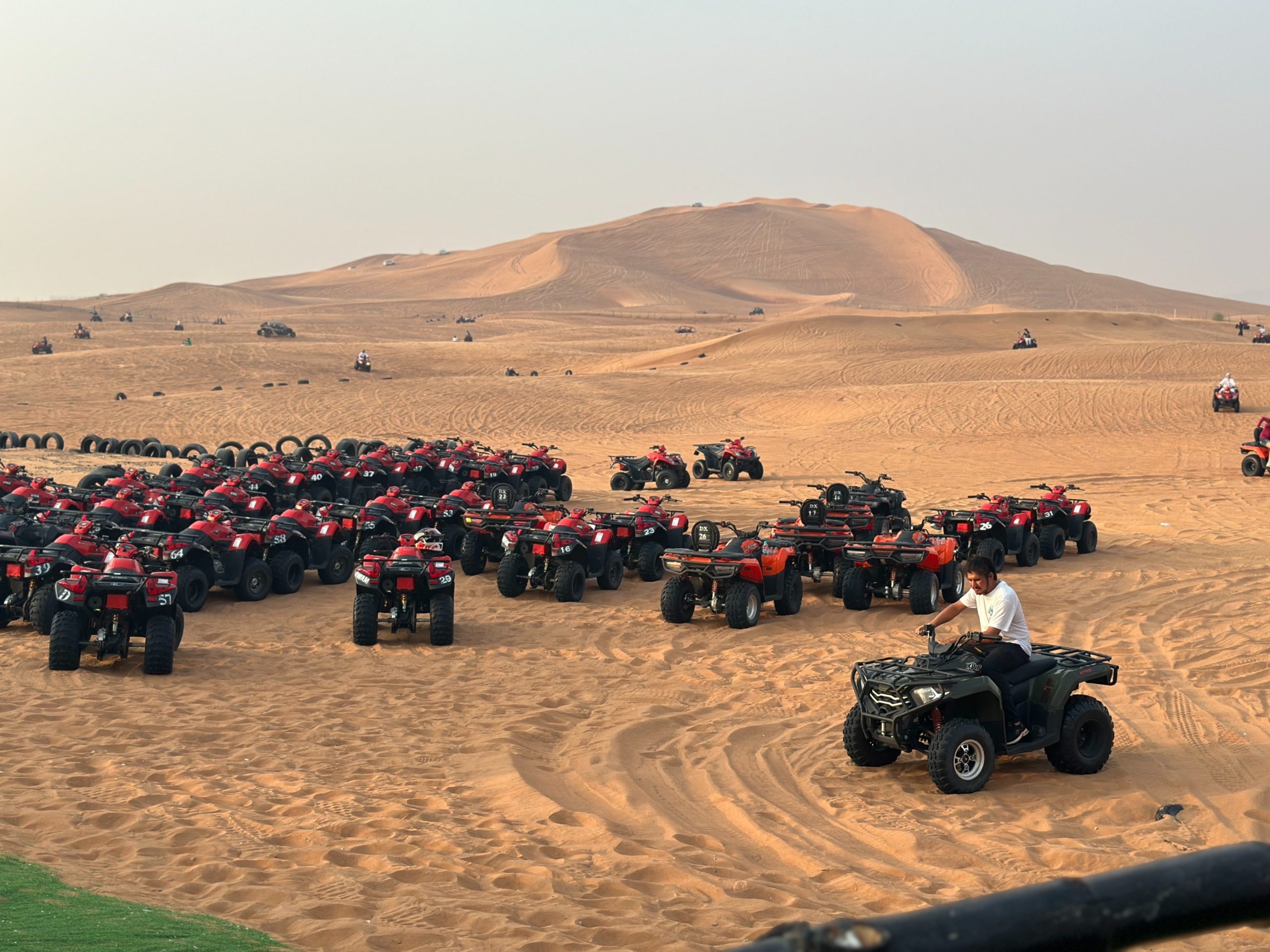
Sand changes everything. In the open, soft dunes of the Al Badayer desert, even a powerful dirt bike rarely sees its listed top speed.
Soft sand drains momentum, steep dune faces demand throttle control, and the rider has to read the surface constantly.
On our routes, riders are typically moving at a fraction of the bike’s maximum, and the experience still feels fast because the dune environment is so unpredictable.
Practical tips from our guides:
Al Badayer, known as the Big Red Desert, is roughly 45 minutes from Downtown Dubai. Dirt bikes are off-road machines and must stay in licensed desert areas; riding them on public roads in the UAE is illegal.
With taller gearing, an aftermarket exhaust or ECU tune, and a lighter rider in a streamlined position, many dirt bikes exceed their stock top speed.
Large-displacement dual-sport and rally bikes can pass 100 mph. But this is rarely the right goal: stock suspension, tyres and brakes are designed around stock speeds, and every extra mph adds risk.
For recreational riders, better technique and the right bike size beat modification.
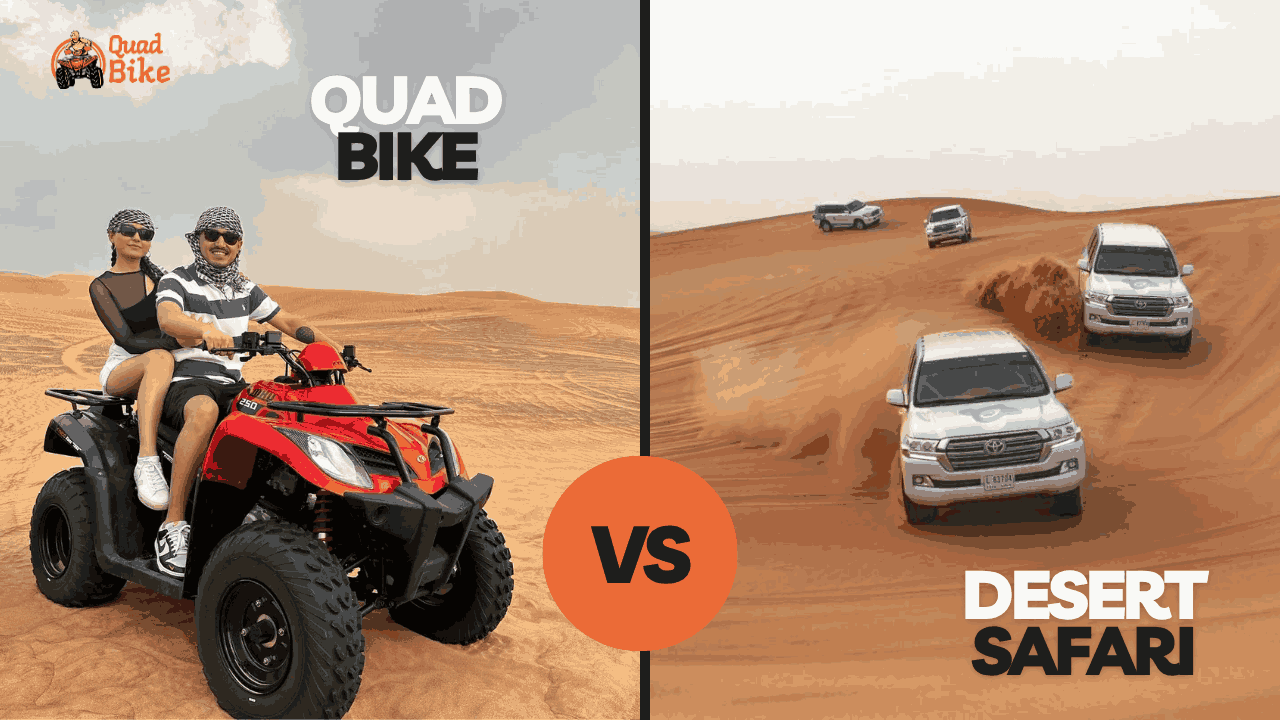
A dirt bike is lighter and more agile, so it feels faster through corners and over bumps. A quad bike or ATV is heavier, wider and far more stable, so it feels easier to control even when its top speed is similar. Large utility and sport quads in the 500–700cc class can be very quick on firm ground, but guided tour speeds are managed for the group.
If you are choosing between the two for a trip:
No. The best dirt bike is the one you can control on the worst section of the ride, not the fastest one on a straight. As a rule:
Whatever you ride, dress properly. Helmet, goggles, long sleeves and closed shoes are the minimum, and our guide on what to wear for quad biking in Dubai applies equally to dirt bikes.
Most dirt bikes reach 25–100 mph depending on engine size. A 50cc reaches about 25–40 mph, a 125cc about 45–70 mph, a 250cc about 65–85 mph and a 450cc about 80–100+ mph.
Stock 450cc dirt bikes commonly reach 80–100 mph, and tuned or specially geared desert and rally bikes can exceed 100 mph. Very few riders ever need or use that speed off-road.
A 125cc typically reaches 45–70 mph and a 250cc about 65–85 mph. The 250cc is faster and heavier, with far more mid-range power, so it is better suited to experienced adults.
Yes. A 50cc dirt bike typically goes 25–40 mph, and many youth models are limited to even less. That is plenty for a child learning throttle and brake control.
Not always. Gearing, weight, stroke type and terrain all affect speed. A light, well-geared 2-stroke can match or beat a heavier bike with a larger engine.
Much slower than on firm ground. Soft sand creates drag and cuts top speed, so even a powerful dirt bike spends most of a desert ride well below its maximum.
Yes, in licensed off-road desert areas with a licensed operator. Riding on public roads is not allowed. ESA Quad Bike Dubai is DTCM-licensed and offers guided dirt bike rides for riders aged 18+.
Speed figures are useful, but nothing replaces feeling a dirt bike climb a red dune. Our DTCM-licensed team, certified guides and daily-inspected fleet make it simple to find the right bike for your experience level, whether that is a dirt bike tour, a family quad ride or a full safari combo.
Ready to ride? Book via WhatsApp for instant confirmation; contact our team.